
Time to say goodbye ?


I started disassembly on the engine to replace the camshaft cover gasket and when I was removing the coil packs was quite shocked to see one of the spark plugs come out with it.
That would explain the pop and the lack of compression up that A-Road. I took the plug off the ht lead and tried to screw back in but it span with very light torque. So whoever has worked on it in the past has knackered the thread and it's eventually just unwound on what it had and blew out.
I'm looking at a heli coil to rectify the issue. Has anyone done one of these before on a K ? What did you use/how did it go/what was the outcome ?
From the research I've done this evening these seem to be the trick (Save-A-Thread) > https://www.amazon.co.uk/Helicoil-5334-14-Thread-Thread-Repair
As a side note, the cam cover gasket that was already installed seemed perfectly fine. No Damage at all. Although there is evidence of oil leaking from that location so I put the new one on anyway. The new genuine MG Rover one I had seemed to have a porous material coating the metal unlike the one I removed which was just a standard sheet metal gasket.
Pretty much all 4 of the spark plugs were oily/sooty. No signs of wearing away or anything.
Thankyou to everybody for your help so far. Any advice as always appreciated

Please Log in or Create an account to join the conversation.
- Airportable
-
 Offline
- Master MGer
-

Site Supporter
- Posts: 3672
- Thanks: 912
Obviously others are invited to add to this if there’s a divergence of opinion.
Cobb’s is usually an excellent bellwether on such things, I’m sure he will have words for us.
Please keep us informed of your progress, as you have noticed we are nosey buggers.
M
Please Log in or Create an account to join the conversation.


So whilst I cant give you a guide tailored to the MGF/TF, I can give you a generic one.
Give me a little time to write one, I can probably do it today as it's pissing rain outside so I've got bugger all else to do today!
it will be posted in the how to section for posterity, it will be for general thread insert needs with dedicated info for sparkplug threads.
I will post a link here when done.
"Keep calm, relax, focus on the problem & PULL THE BLOODY TRIGGER"
Please Log in or Create an account to join the conversation.
I've didn't put it into the How To's as there is so much stuff it in there it's likely to be too hard to find. Seeing as it's really a tool specific how to I put it into ToolTime to keep it separate from the job specific MGF/TF Howv To's
I will in time do more tool specific how to's which
I intend to place in ToolTime.
And I should do a tread on how not to bugger up your spark plug threads probably tomorrow if I have time.
"Keep calm, relax, focus on the problem & PULL THE BLOODY TRIGGER"
Please Log in or Create an account to join the conversation.


That's only when I'm not too busy being a bad man!You are a good man Cobber.
"Keep calm, relax, focus on the problem & PULL THE BLOODY TRIGGER"
Please Log in or Create an account to join the conversation.
One question I have is a lot of people after tapping seem to be applying high temp sealant on the insert before screwing in which I didn't seem to see you suggest on the guide.
What's you're opinion on this given that you've done these on many an engine in the past ?
Please Log in or Create an account to join the conversation.
And given the grease reside left over from cutting the spark plug thread i doubt the sealant would adhere to to thread in the head very well anyway.
I've never had a helical thread insert fail whilst the spark plug was in place. I have had one try and unscrew with the spark plug, and then I just replaced it. it wasn't one that had been fitted by me.
"Keep calm, relax, focus on the problem & PULL THE BLOODY TRIGGER"
Please Log in or Create an account to join the conversation.
"Keep calm, relax, focus on the problem & PULL THE BLOODY TRIGGER"
Please Log in or Create an account to join the conversation.
Cobber alluded to swarf getting in to the bores and it can't really be avoided but you can minimise the risks with string.
Grease up some thinnish string and feed it down the plug hole. Let it sit on top of the piston, it can't go anywhere, raise the piston up close to TDC so it is high in the bore. That way any swarf can't spray outwards it can only drop downwards. Removing the string brings out the swarf..or most of it anyway.
Another use for string, especially in pushrod engines like the B's etc is to use it to shore up a valve.
If a valve spring breaks or you need to change a valve stem oil seal you can do it without removong the head.
Put the piston about halfway up the bore, drop a pile of string down the plug hole leaving a length showing to be able to pull it back out.
Raise the piston and the string will compress in to the combustion chamber supporting the valve.
You can then remove the valve spring retainer and the collets and the string will stop the valve dropping.
If the valve isn't supported it makes it impossible to compress the new spring and fit the retainer.
You sometimes have to tweak the crank to force the string against the valve but it does no harm. Once done remove the string and carry on as normal.
We used the 2TB pushrod engine a lot which revved to 8k. It broke valve springs. This saved removing the head.
Please Log in or Create an account to join the conversation.
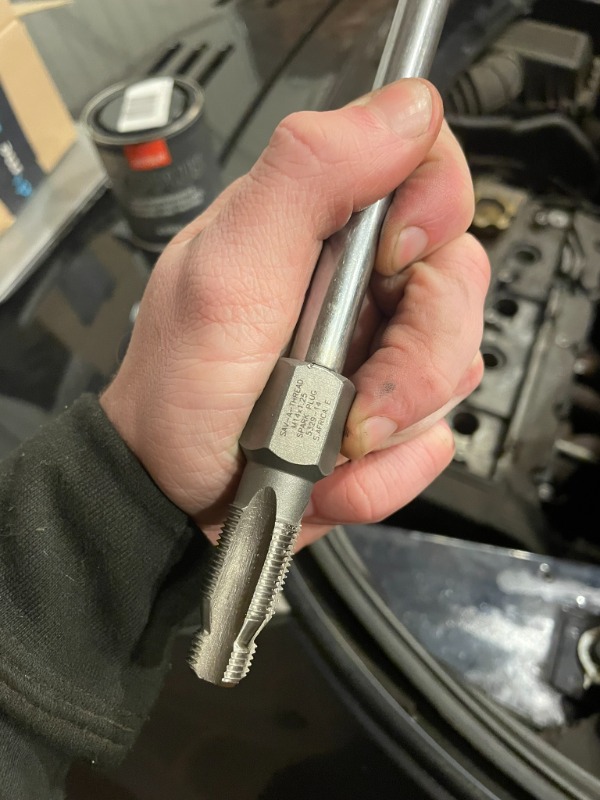
I first made sure the piston wasn't too high in the cylinder that the tap would hit it. I greased up the tap, clipped it into the long extension, got it into the spark plug thread and screwed the tapered guide in by hand. I then attached a ratchet and as cobbs guide suggests, slowly tapped 3 rotations forward and 2 back which was a success. I then screwed my insert onto the spark plug, screwed in and it the good news is that I have a nice new strong thread to work with.
I could have left the spark plug there as it would have been flush but I wanted to get the job done properly. The insert I'm using has outward teeth at the top of the insert, on the outside and above the thread which are designed to be lined up flush and punched with a tool provided with the kit to expand the teeth into the block. Preventing the insert from exiting the thread when you take the spark plugs out in future.
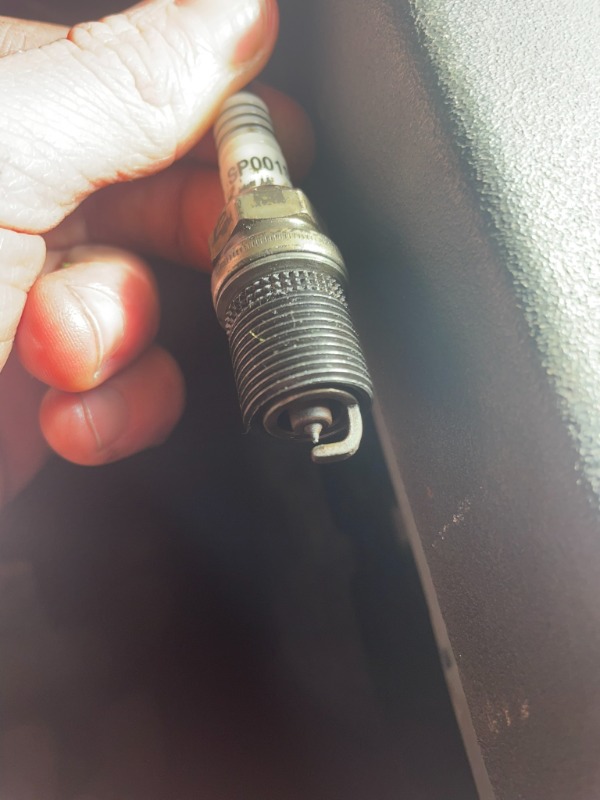
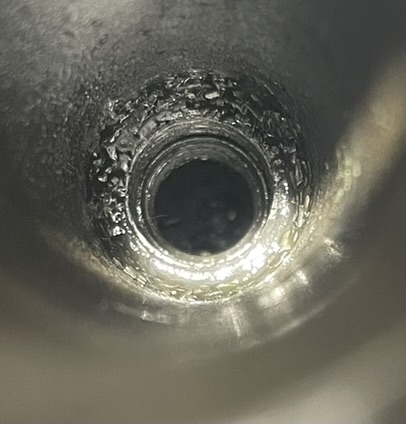
When I first took the spark plug out to inspect, the insert came out with it. So I thought I'd have to screw it in nice and tight for it to stay put. I took the spark plug out again and noticed that the insert was too high and not flush so I put the spark plug back in to screw down again. I've then somehow managed to screw the insert too far down into the thread, so the thread on the spark plug won't catch it.
On the bright side, at least it hasn't fallen into the cylinder because that would be a serious pain. At the moment, I need to figure out how I'm going to grip that insert and raise it up the thread without that happening.
I would like to punch the insert in like it's designed for. But I also can't think for how I'm going to get the insert flush and free in order to do that.
Any suggestions gents ?
Please Log in or Create an account to join the conversation.
Here are some pictured
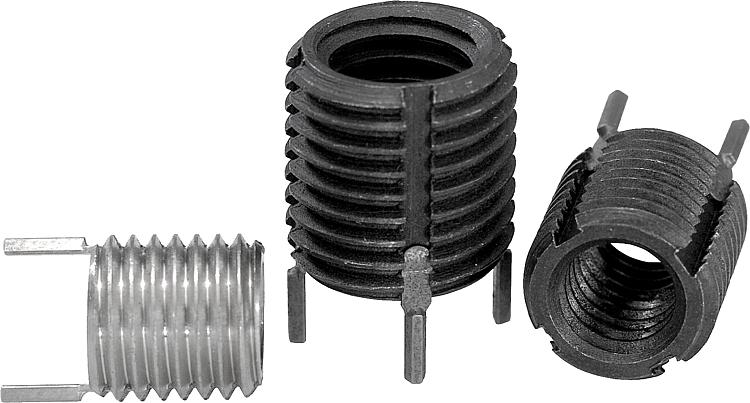
I'm not aware of these being available for the repair of spark plug threads, I would imagine the awkward location of many spark plugs would make these type of inserts too difficult to install.
The type of thread insert I was referring to are a helically wound length of wire with a diamond shaped cross section.
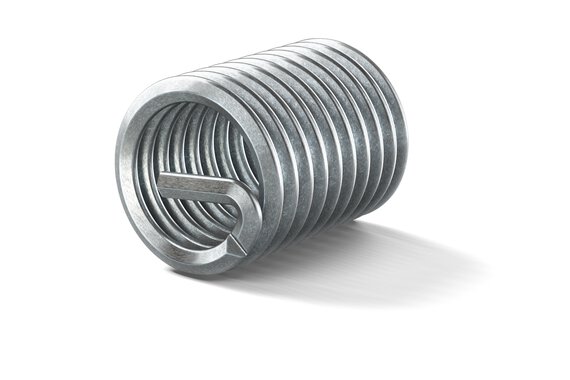
From what I gather from what you've written here you should've locked it into place by punching it before you screwed in the plug and moved it!
Looking at the insert in the pic were it's sitting on the on the plug I can see it is knurled above the thread. I guess that when punched this knurled section is meant to deform to lock the insert in place.
What is the brand of insert?
And how far is it too far screwed in?
I'm sure we can come up with a recovery method. However that particular insert may not be reusable once we get it out, you may have to use a fresh one, it all depends on how hard it is to recover.
"Keep calm, relax, focus on the problem & PULL THE BLOODY TRIGGER"
Please Log in or Create an account to join the conversation.