
Defeating Superlock


I am starting this discussion for two reasons. First so as not to further clutter the other topic that is running at present where the contributor is struggling to gain access to his vehicle, and secondly to educate myself about the issues with this superlock in response to a state of panic a while ago when stood watching the door buttons going up and down but not releasing the door.
It is my hope that others will comment accordingly and correct me where I am wrong.
So here is the first statement. At present I have dismantled the lock I previously removed to resolve the issue experienced as described above.
Second, what follows refers to a MGTF 135 with the Lucas fob
Third, (and someone with greater knowledge than me may well shoot me down in flames almost immediately) it is my opinion that if the battery to the car is isolated it should be possible for the mechanical key to turn the lock barrel such that the lock itself is unlocked thereby overcoming superlock.
This assumes that there are no broken components within the lock itself and that all the linkages connecting the external door handle to the lock case are correctly adjusted (remember they are threaded for adjustment so some setting up must be required).
Whilst there are numerous comments surrounding the reliability of the locks I find it hard to imagine that the design brief when the car was on the drawing board was such that it excluded a means to enter the car if the electrical system failed. If there are broken components within the lock mechanism that jam it all up that is a different matter.
So, if I'm right why should we fear superlock? Why the need to cut that wire?
I am in the process of writing up a brief report on what I have found as I have inspected the lock components and will add this for further comment when I have completed it but that is unlikely to be for a few days now.
It is my hope that others will comment accordingly and correct me where I am wrong.
So here is the first statement. At present I have dismantled the lock I previously removed to resolve the issue experienced as described above.
Second, what follows refers to a MGTF 135 with the Lucas fob
Third, (and someone with greater knowledge than me may well shoot me down in flames almost immediately) it is my opinion that if the battery to the car is isolated it should be possible for the mechanical key to turn the lock barrel such that the lock itself is unlocked thereby overcoming superlock.
This assumes that there are no broken components within the lock itself and that all the linkages connecting the external door handle to the lock case are correctly adjusted (remember they are threaded for adjustment so some setting up must be required).
Whilst there are numerous comments surrounding the reliability of the locks I find it hard to imagine that the design brief when the car was on the drawing board was such that it excluded a means to enter the car if the electrical system failed. If there are broken components within the lock mechanism that jam it all up that is a different matter.
So, if I'm right why should we fear superlock? Why the need to cut that wire?
I am in the process of writing up a brief report on what I have found as I have inspected the lock components and will add this for further comment when I have completed it but that is unlikely to be for a few days now.
by Delbourt
Please Log in or Create an account to join the conversation.
I appreciate this.
I am learning so much about these cars and therefore my car. Same model and fob as yours.
I am learning so much about these cars and therefore my car. Same model and fob as yours.
by TA22GT
Please Log in or Create an account to join the conversation.
- Airportable
-
 Offline
- Master MGer
-

Site Supporter
- Posts: 3672
- Thanks: 912
I tried in my last post on the subject to convey the irrational reaction to the super lock “fly past” indeed I reacted in the same way when first I became aware; “get that wire cut PDQ”.
I have to agree with the fail safe premiss; no designers worth their salt would pass for manufacturer a product which would endanger either driver or passenger if there were to be a mishap.
Certainly the impact sensor should instruct any lock mechanism to release & isolate ignition & fuel but I’m thinking more of an electrical failure caused by a failed fuse.
This thread might run, it will be interesting & worth keeping up to date.
M
I have to agree with the fail safe premiss; no designers worth their salt would pass for manufacturer a product which would endanger either driver or passenger if there were to be a mishap.
Certainly the impact sensor should instruct any lock mechanism to release & isolate ignition & fuel but I’m thinking more of an electrical failure caused by a failed fuse.
This thread might run, it will be interesting & worth keeping up to date.
M
by Airportable
Please Log in or Create an account to join the conversation.
- Notanumber
-
 Offline
- Senior MGer
-

Site Supporter
- Posts: 2374
- Thanks: 504
I'm not clear on whether use of the key on the driver's door can override the superlock but most complaints seem to relate to the passenger door which is devoid of the ability to use a manual key.
I'd be most interested to see what you are able to discover about failsafe options and if there is any alternative to a superlocked passenger door other than butchering the door card.
At present its in my top 6 pieces of initial advice to new owners:
1 fit a coolant level alarm
2 check the boot hinge wiring.
3 check the bonnet latch and release cable move freely
4 check tyre type and pressures
5 replace fob batteries and keep a spare
6 disconnect the brown/pink superlock wires
I'd be most interested to see what you are able to discover about failsafe options and if there is any alternative to a superlocked passenger door other than butchering the door card.
At present its in my top 6 pieces of initial advice to new owners:
1 fit a coolant level alarm
2 check the boot hinge wiring.
3 check the bonnet latch and release cable move freely
4 check tyre type and pressures
5 replace fob batteries and keep a spare
6 disconnect the brown/pink superlock wires
2003 MG TF 135 sunstorm
1979 MGB GT
Previously:
2002 115 TF + 1998 118 MG F
by Notanumber
Please Log in or Create an account to join the conversation.
It is my understanding that the superlock performs as follows. If I’m wrong can someone please tell me.
It can only be engaged electronically i.e. by use of the fob.
Once engaged the door lift button, the internal and external door opening mechanisms are disabled (it probably initiates the alarm associated with any internal movement detection too but for the purposes of this discussion I’m not considering anything to do with the alarm systems).
There are two electrical motors. One to operate a spur gear and its quadrant. When locking the door the movement of the quadrant is limited by a pawl. The second is the motor associated with the superlock.
The job of the superlock motor (as far as I can see) is solely to apply a torque sufficient to swing the pawl clear of the quadrant in such a way that the standard motor can continue to rotate the quadrant to the final or maximum travel position. In that position the door button is disabled.
From what I can see thus far return movement of the quadrant does not require the pawl to be moved.by its associated motor.
If the above is accepted it would seem to suggest that any inability of the motors to open the door is more down to a different electrical problem or a failed mechanical component within the mechanism jamming it all up. In that situation I agree that a key will not open the passenger door or the driver’s door either.
If I’m right I can now understand if “machine gun” is taking place that the means to overcome the situation is to open boot/bonnet and disconnect the battery before using the key to unlock the door. In a state of panic that might not be the first thing on one’s mind. It certainly wasn’t on mine.
Why does “machine gun” occur? That is a different question and one I’m not likely to discover but it could be something to do with one of the limiting micro switches.
If the mechanism is broken with a part jamming the spur gear and quadrant , or any other part, no key will open the door but it is not a fault of the superlock specifically in my view.
As indicated I hope to have a brief description of what I have managed to discover by dismantling the one I have. But that will not be for some days .
In the interim if any one can add anything to this discussion I would welcome it.
Regarding micro switches. My first impressions are that as the door is locked either by the key or its fob a cam sweeps past one micro switches and changes its status from on to off and back on again (possibly the other way around) and my thoughts on this are that any interruptions in signal as the switch changes status could confuse the ECU and start telling it to perform the other action and set up a repeating cycle unlock/lock etc. But that is speculation.
It can only be engaged electronically i.e. by use of the fob.
Once engaged the door lift button, the internal and external door opening mechanisms are disabled (it probably initiates the alarm associated with any internal movement detection too but for the purposes of this discussion I’m not considering anything to do with the alarm systems).
There are two electrical motors. One to operate a spur gear and its quadrant. When locking the door the movement of the quadrant is limited by a pawl. The second is the motor associated with the superlock.
The job of the superlock motor (as far as I can see) is solely to apply a torque sufficient to swing the pawl clear of the quadrant in such a way that the standard motor can continue to rotate the quadrant to the final or maximum travel position. In that position the door button is disabled.
From what I can see thus far return movement of the quadrant does not require the pawl to be moved.by its associated motor.
If the above is accepted it would seem to suggest that any inability of the motors to open the door is more down to a different electrical problem or a failed mechanical component within the mechanism jamming it all up. In that situation I agree that a key will not open the passenger door or the driver’s door either.
If I’m right I can now understand if “machine gun” is taking place that the means to overcome the situation is to open boot/bonnet and disconnect the battery before using the key to unlock the door. In a state of panic that might not be the first thing on one’s mind. It certainly wasn’t on mine.
Why does “machine gun” occur? That is a different question and one I’m not likely to discover but it could be something to do with one of the limiting micro switches.
If the mechanism is broken with a part jamming the spur gear and quadrant , or any other part, no key will open the door but it is not a fault of the superlock specifically in my view.
As indicated I hope to have a brief description of what I have managed to discover by dismantling the one I have. But that will not be for some days .
In the interim if any one can add anything to this discussion I would welcome it.
Regarding micro switches. My first impressions are that as the door is locked either by the key or its fob a cam sweeps past one micro switches and changes its status from on to off and back on again (possibly the other way around) and my thoughts on this are that any interruptions in signal as the switch changes status could confuse the ECU and start telling it to perform the other action and set up a repeating cycle unlock/lock etc. But that is speculation.
by Delbourt
Please Log in or Create an account to join the conversation.
Hopefully the images I have will be shown in the relevant places in the text below. After dismantling and re assembling the lock, testing the switches, and thinking about the results in conjunction with the detail shown in the contributions made some time ago by "others" (please see acknowledgements) I'm struggling to think what would cause the door lock motor to rapidly rotate in alternative directions once the unlock button is pressed on the fob. If anyone can add clarity to that I would be very pleased to hear about it.
Unfortunately not all images are in the intended places and some are repeated. Apologies for the errors ( I don't seem to be able to select just one and delete just one etc)
Sueprlock ~ should we be concerned?
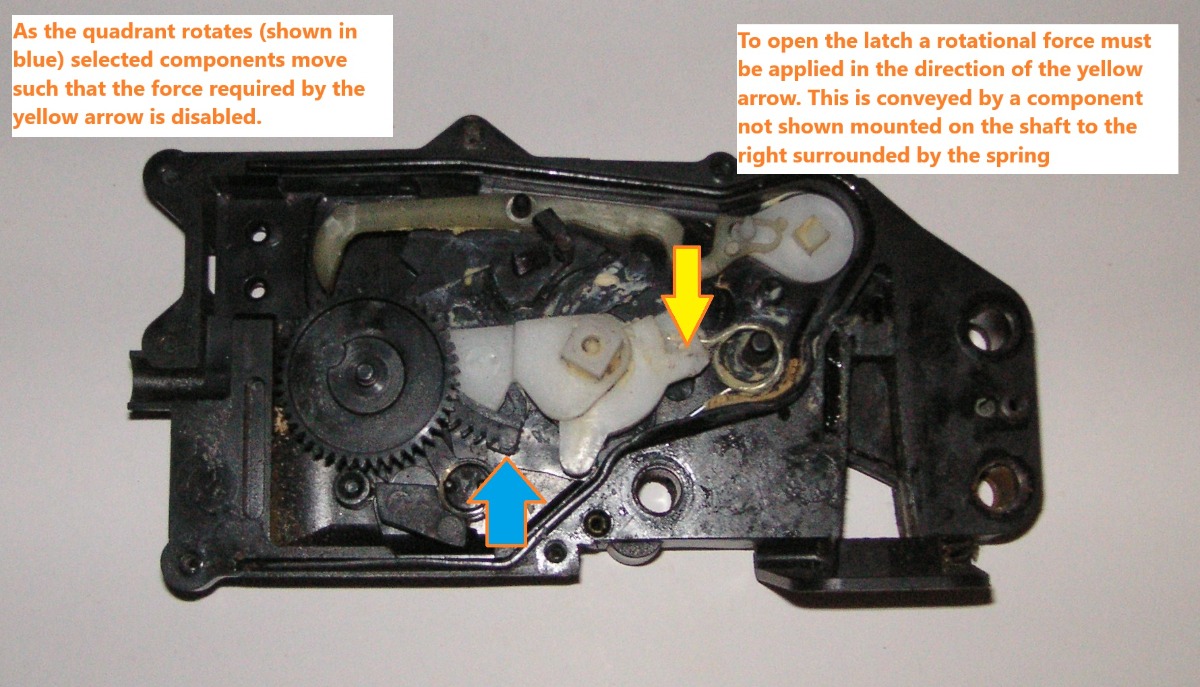
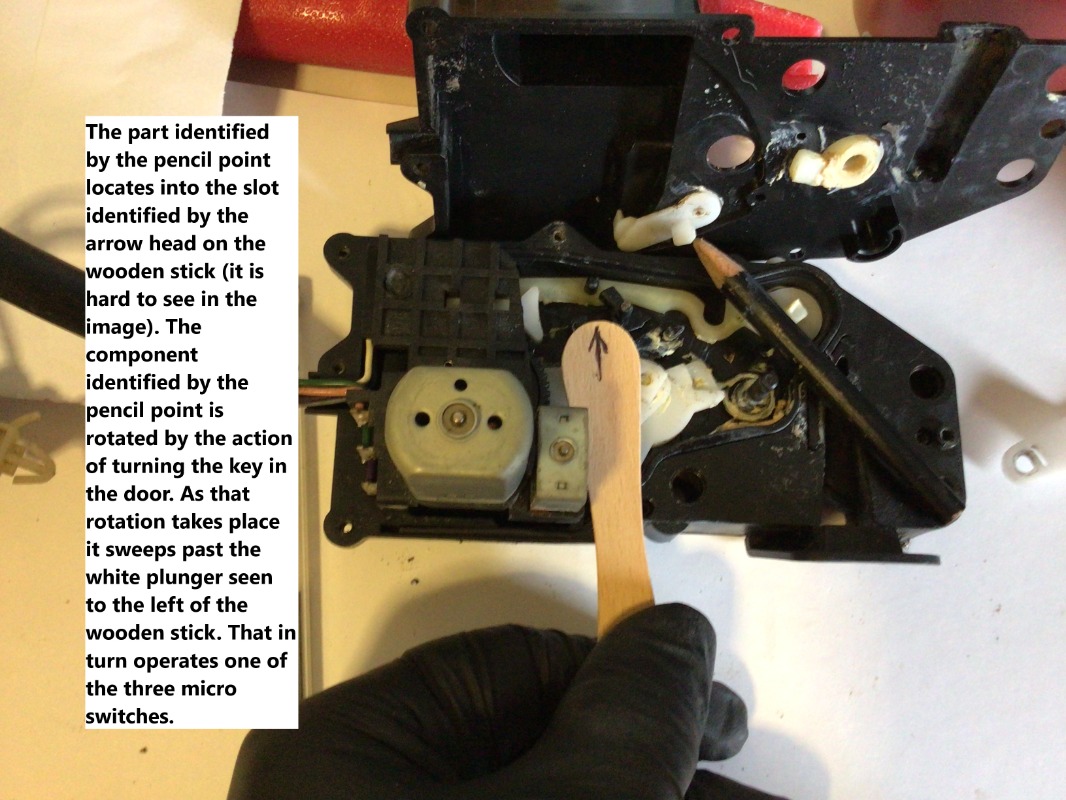
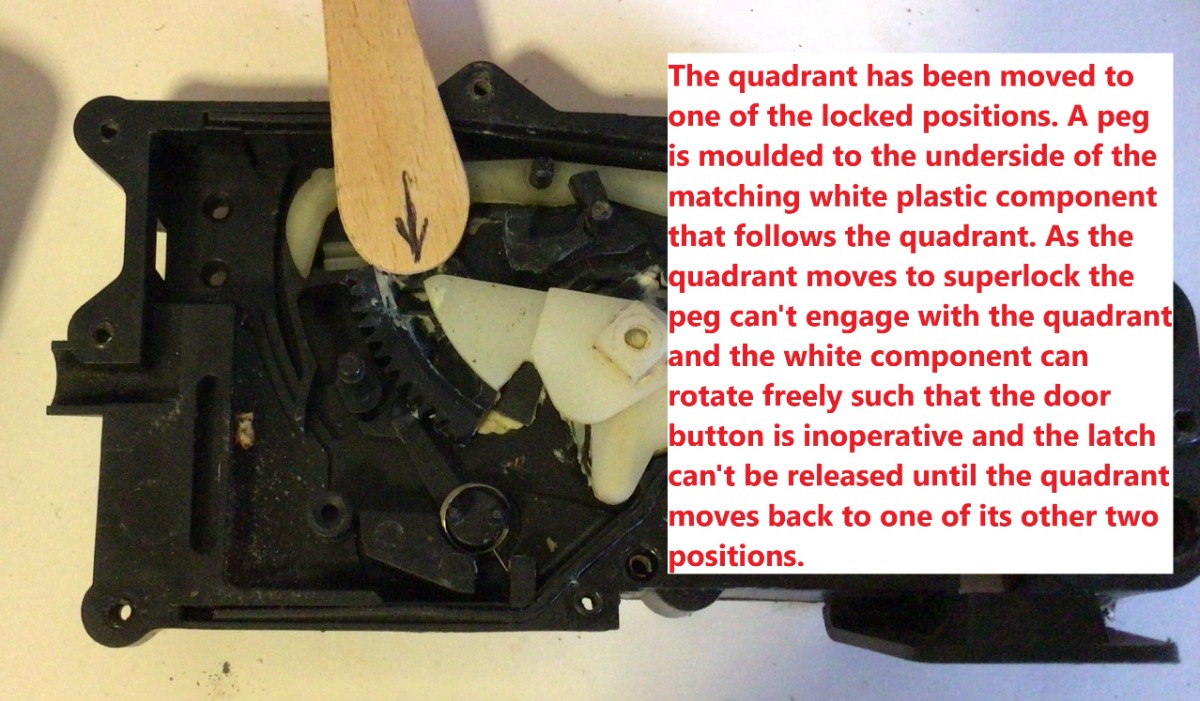
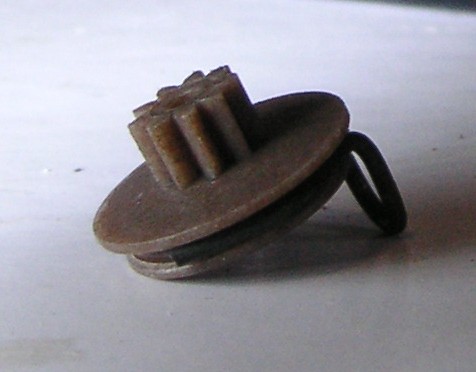
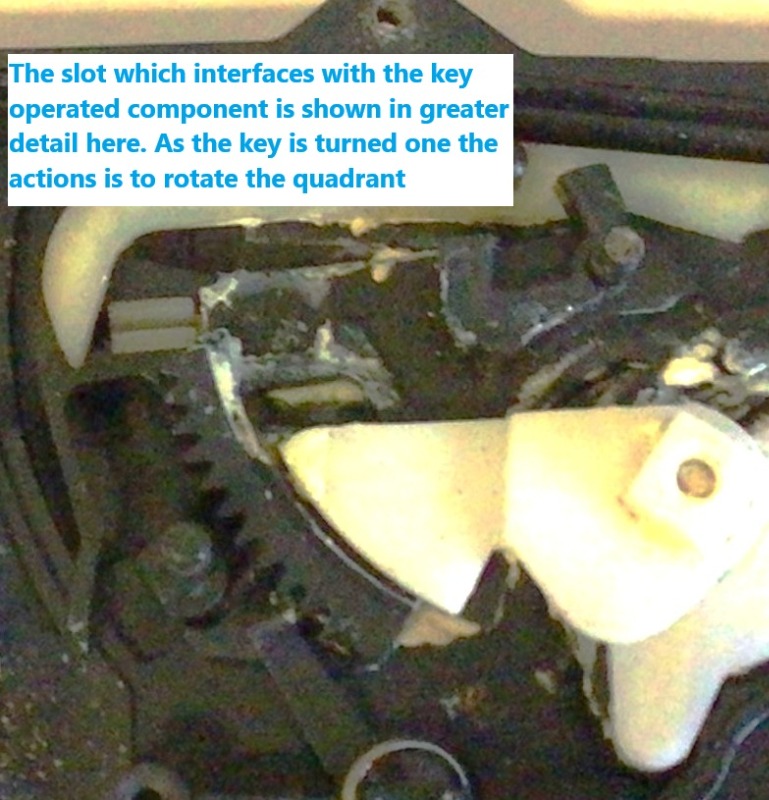
This topic is raised in response to an apparent failing door lock and a need to understand what is happening and how it might be overcome should the need arise. The resolution many seem to suggest or support is destroying the door card to gain access to the lock.In an earlier comment above (see #210312 by Noanumber) it became obvious that there was an oversight in my thinking and that the “light bulb moment” arrived when stopping to consider the fact that the failed lock situation can happen to both doors and not just the driver’s door. In the discussion that follows no easy solution is identified to resolve that and the best advice offered from one source seems to be the best i.e. replace it as soon as it starts to show a problem (and in some regards that applies to each of the two doors).The car in question is a MGTF 135 and fitted with the Lucas system not the Pectron locking system.Soon after purchase and almost on the first trip out the car was locked using the fob (but not superlocked), after a brief interval an attempt was made to unlock the door whereupon the first example of “machine gunning” was experienced. Eventually entry into the car was achieved and at this point in time it is not remembered how. At the time both door lock buttons were going up and down in rapid sequence with the passenger door perhaps more slowly. About an hour later after stopping for lunch the car was again locked using the fob and on return a similar “machine gunning” was experienced. Subsequent to that experience the car was locked using the key only and there were no further occurrences. Being bold or foolish and uninformed an overnight stop-over demanded the use of the fob and there were no issues the following morning. However, a replacement driver’s door lock was obtained and fitted. During the process of removal the old lock was accidentally activated somehow although how is not recorded even if it was noted at the time but during that activation the “machine gunning” occurred again. It is perhaps worth noting this to reflect on what was identified during subsequent “bench” testing.After reading around the subject it became clear that the “superlock” was something to be fearful of but why is not recorded.It seems strange to think that the designers would not consider total electrical loss such as a flat battery or blown fuse and not being able to access the vehicle and with that thought in mind the “failed” lock was partially dismantled to try and discover how it worked and what could be done if the lock in the car failed too. What follows refers to the examination of the “failed lock”The plastic case was removed from the lock and it soon became apparent that there are two chambers. The first one containing the components associated with the latch and keeping the door closed and presumably of some significant mechanical integrity, and the second chamber containing the electrical motors and associated components associated with “central locking”. No attempt has been made to dismantle the chamber associated with the door latch and keeping the door shut.Once the cover had been removed the motors and micro switches were lifted clear and the mechanism operated several times by manually closing the latch, operating the locking button, the door handle lever(s), the key operation lever, and eventually moving the system to the superlock position. By swinging the superlock pawl out of the way it was seen to be easy to move the system to superlock and that nothing prevented the system from returning to the open position i.e. there was no need to lift the interlocking pawl clear for the system to return to the unlocked position if unlock was called for.It was seen that once the system was in the locked position the door could not be opened by use of either of the door handles as expected. In that first locked position the door button could unlock the system and the door could then be opened using either of the two door handles (again as expected). If the system is moved to the superlock position the door button became inactive i.e. it was not possible to unlock the system. However, if the key was deployed it was possible to overcome superlock and return the system to open. That would seem to be entirely sensible. It should be noted however that it was not possible whilst bench testing to move the system to the superlock position once the motors and micro switches were re fitted. So gaining a sense of how difficult it might be to move from superlock to unlock using the key only could not be assessed. As the existing lock fitted to the car will not move to superlock it has not been possible to make or confirm that assessment with a live system using the key.In summary there is no apparent reason to fear superlock as it should be possible to overcome the superlocked position using the key.Clearly many of the components associated with the “central locking” section of the lock are both intricate in shape and small and as has been shown in other work “by others” some are liable to failure. It is therefore thought that however the lock is operated whether to the first position or the superlocked position if one of those smaller plastic components fails it could either jam up or render the system inperative. In such circumstances being in the superlocked position might make it more complicated if not impossible to open the door depending on what had failed. In an image below it is possible to see an operating cam for the second chamber containing the components of significant integrity. If the mating plastic components can’t move that cam it will not be possible to open the door. For that to happen the “quadrant” and the other interlocking components all have to be in the right place and functioning in the opinion of the writer if the door is to be opened.The superlock motor appears to have a drive shaft that engages with two pegs on a shaft within the lock case. The sole job of that motor appears to be such as to swing a pawl out of the way and nothing else. It appears to be easy to rotate that motor shaft by hand with minimal resistance.The lock motor appears to have a clutch mechanism associated with its drive shaft. There is a sprung loaded peg that engages with a hoop that grips the spur gear fitted to the motor shaft (but with a slipping feature). It is presumed that the sprung loaded peg is swung out under centrifugal force to deploy the clutch. Movement of the quadrant appears to trigger one of the micro switches but as there are three positions for the quadrant (open, locked, and superlocked) it is not immediately clear how the locked or superlocked positions are determined by the BCU. It is also noted that as there are two doors there is more than one motor involved. Perhaps it is here that the clutch features.It would be helpful if someone with greater knowledge of the 5AS system could add some explanation as to how the two doors and associated switches interact with the 5AS i.e. what determines how long the door lock motors run for. The clutch must be there for a purpose.Here are selected images from the dismantling exercise. First is an image showing the casing with most of the plastic components removed. The one remaining in the top right of the case rotates when the door latch is closed.
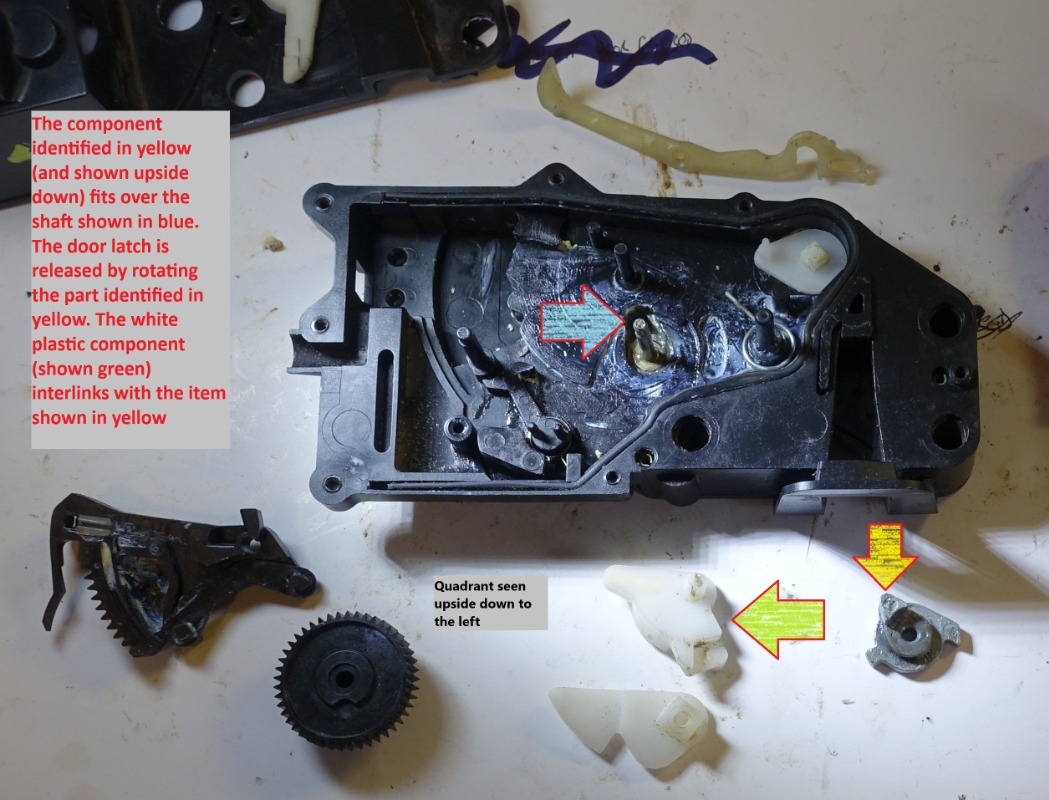 If the system condition is such that rotation of the items identified in yellow and green are prevented then the latch will never be released.Below is an image showing the quadrant in place and some of the components involved in releasing the latch.
The action of turning the key is shown below.
 Other images are shown here illustrating the superlock motor shaft and the locking motor shaft with the clutch components. The plunger associated with key operation can also be seen.
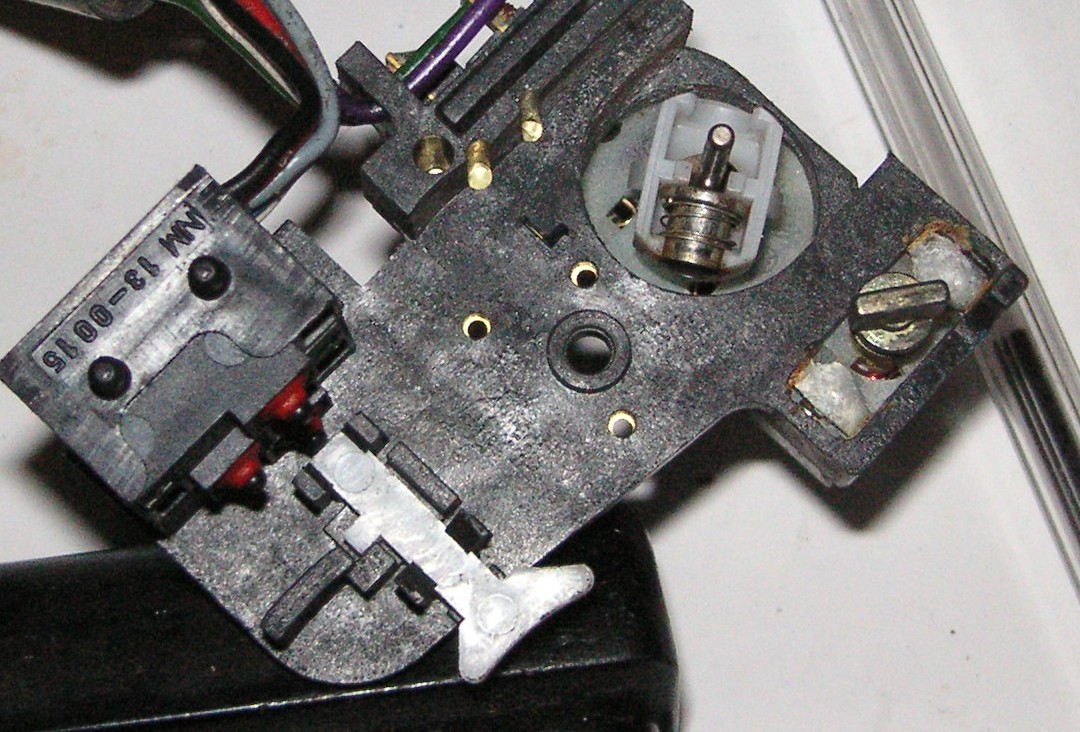
 Prior to re assembling the lock attempts were made to discover what status the micro switches adopted in the relaxed and operated positions. This latter was achieved by holding the switches closed using rubber bands and testing for continuity. This was more difficult that anticipated due to the need for multiple hands etc. After re assembling the lock the tests for continuity were again made. The results were less than convincing, and it appeared that at least one of the pins in the connector was no longer making good connection with its associated wire. It is therefore considered that this may be a reason for some of the difficulties experienced in operation.AcknowledgementsFrom the mgfregister.org (and thanks to Ian)
Central Locking Gone Again - Page 2 - The MGF Register Forums
From t-bar-mg topic “MGTF Door lock Question”Replied by SundanceUK , on topic MGTF Door Lock question, 03 Sep 2020 18:43
https://www.the-t-bar.com/forum/9-mgf-tf-pitstop/97178-mgtf-door-lock-question?start=12#194139
Prior to re assembling the lock attempts were made to discover what status the micro switches adopted in the relaxed and operated positions. This latter was achieved by holding the switches closed using rubber bands and testing for continuity. This was more difficult that anticipated due to the need for multiple hands etc. After re assembling the lock the tests for continuity were again made. The results were less than convincing, and it appeared that at least one of the pins in the connector was no longer making good connection with its associated wire. It is therefore considered that this may be a reason for some of the difficulties experienced in operation.AcknowledgementsFrom the mgfregister.org (and thanks to Ian)
Central Locking Gone Again - Page 2 - The MGF Register Forums
From t-bar-mg topic “MGTF Door lock Question”Replied by SundanceUK , on topic MGTF Door Lock question, 03 Sep 2020 18:43
https://www.the-t-bar.com/forum/9-mgf-tf-pitstop/97178-mgtf-door-lock-question?start=12#194139
Unfortunately not all images are in the intended places and some are repeated. Apologies for the errors ( I don't seem to be able to select just one and delete just one etc)
Sueprlock ~ should we be concerned?
This topic is raised in response to an apparent failing door lock and a need to understand what is happening and how it might be overcome should the need arise. The resolution many seem to suggest or support is destroying the door card to gain access to the lock.In an earlier comment above (see #210312 by Noanumber) it became obvious that there was an oversight in my thinking and that the “light bulb moment” arrived when stopping to consider the fact that the failed lock situation can happen to both doors and not just the driver’s door. In the discussion that follows no easy solution is identified to resolve that and the best advice offered from one source seems to be the best i.e. replace it as soon as it starts to show a problem (and in some regards that applies to each of the two doors).The car in question is a MGTF 135 and fitted with the Lucas system not the Pectron locking system.Soon after purchase and almost on the first trip out the car was locked using the fob (but not superlocked), after a brief interval an attempt was made to unlock the door whereupon the first example of “machine gunning” was experienced. Eventually entry into the car was achieved and at this point in time it is not remembered how. At the time both door lock buttons were going up and down in rapid sequence with the passenger door perhaps more slowly. About an hour later after stopping for lunch the car was again locked using the fob and on return a similar “machine gunning” was experienced. Subsequent to that experience the car was locked using the key only and there were no further occurrences. Being bold or foolish and uninformed an overnight stop-over demanded the use of the fob and there were no issues the following morning. However, a replacement driver’s door lock was obtained and fitted. During the process of removal the old lock was accidentally activated somehow although how is not recorded even if it was noted at the time but during that activation the “machine gunning” occurred again. It is perhaps worth noting this to reflect on what was identified during subsequent “bench” testing.After reading around the subject it became clear that the “superlock” was something to be fearful of but why is not recorded.It seems strange to think that the designers would not consider total electrical loss such as a flat battery or blown fuse and not being able to access the vehicle and with that thought in mind the “failed” lock was partially dismantled to try and discover how it worked and what could be done if the lock in the car failed too. What follows refers to the examination of the “failed lock”The plastic case was removed from the lock and it soon became apparent that there are two chambers. The first one containing the components associated with the latch and keeping the door closed and presumably of some significant mechanical integrity, and the second chamber containing the electrical motors and associated components associated with “central locking”. No attempt has been made to dismantle the chamber associated with the door latch and keeping the door shut.Once the cover had been removed the motors and micro switches were lifted clear and the mechanism operated several times by manually closing the latch, operating the locking button, the door handle lever(s), the key operation lever, and eventually moving the system to the superlock position. By swinging the superlock pawl out of the way it was seen to be easy to move the system to superlock and that nothing prevented the system from returning to the open position i.e. there was no need to lift the interlocking pawl clear for the system to return to the unlocked position if unlock was called for.It was seen that once the system was in the locked position the door could not be opened by use of either of the door handles as expected. In that first locked position the door button could unlock the system and the door could then be opened using either of the two door handles (again as expected). If the system is moved to the superlock position the door button became inactive i.e. it was not possible to unlock the system. However, if the key was deployed it was possible to overcome superlock and return the system to open. That would seem to be entirely sensible. It should be noted however that it was not possible whilst bench testing to move the system to the superlock position once the motors and micro switches were re fitted. So gaining a sense of how difficult it might be to move from superlock to unlock using the key only could not be assessed. As the existing lock fitted to the car will not move to superlock it has not been possible to make or confirm that assessment with a live system using the key.In summary there is no apparent reason to fear superlock as it should be possible to overcome the superlocked position using the key.Clearly many of the components associated with the “central locking” section of the lock are both intricate in shape and small and as has been shown in other work “by others” some are liable to failure. It is therefore thought that however the lock is operated whether to the first position or the superlocked position if one of those smaller plastic components fails it could either jam up or render the system inperative. In such circumstances being in the superlocked position might make it more complicated if not impossible to open the door depending on what had failed. In an image below it is possible to see an operating cam for the second chamber containing the components of significant integrity. If the mating plastic components can’t move that cam it will not be possible to open the door. For that to happen the “quadrant” and the other interlocking components all have to be in the right place and functioning in the opinion of the writer if the door is to be opened.The superlock motor appears to have a drive shaft that engages with two pegs on a shaft within the lock case. The sole job of that motor appears to be such as to swing a pawl out of the way and nothing else. It appears to be easy to rotate that motor shaft by hand with minimal resistance.The lock motor appears to have a clutch mechanism associated with its drive shaft. There is a sprung loaded peg that engages with a hoop that grips the spur gear fitted to the motor shaft (but with a slipping feature). It is presumed that the sprung loaded peg is swung out under centrifugal force to deploy the clutch. Movement of the quadrant appears to trigger one of the micro switches but as there are three positions for the quadrant (open, locked, and superlocked) it is not immediately clear how the locked or superlocked positions are determined by the BCU. It is also noted that as there are two doors there is more than one motor involved. Perhaps it is here that the clutch features.It would be helpful if someone with greater knowledge of the 5AS system could add some explanation as to how the two doors and associated switches interact with the 5AS i.e. what determines how long the door lock motors run for. The clutch must be there for a purpose.Here are selected images from the dismantling exercise. First is an image showing the casing with most of the plastic components removed. The one remaining in the top right of the case rotates when the door latch is closed.
Last Edit:1 year 6 months ago
by Delbourt
Last edit: 1 year 6 months ago by Delbourt.
Please Log in or Create an account to join the conversation.


Now when you refer to the locks machine gunning is it the quick rattling with little actually happening? or is it more like they're having a tantrum with all that jumping up and down of the lock buttons?
The former could just be insufficient electrical current to properly operate the lock actuators, low battery, bad earth, crappy connections etc. could cause this.
The former I have had on my MG and always tells me I've got bugger all charge in the battery , cos when I go to start it, it won't! Probably because the dumb arse bastard alarm system has sucked all the volts outta the battery again!
The latter with the locking system having a tantie seems more like the system is getting mixed messages, and can't make it's mind up as to what it's meant to be doing, which might be the limit switches sending contradicting information, this might be alignment issue or timing issue, the latter could be due to one side moving slower than the other, maybe stiffer in it's operation or a lazy actuator, possibly something fouling it or dried lube etc. My Ford ute likes to throw a lock tantrum every now and then and I can hear the lock actuators slightly out of time with one another, in the case of the ute it soon calms down and gets it shit together, I would investigate but I can't be arsed as fiddle bumming about with such nonsense bores and shits me ot tears. But I gather what is happening is the sensors are sending mixed messages to the body control module, confusing it which causes it to cycle.
Now I realise the MG system will have differences to the Ford system, but it's something to consider.
When I bought my MG (a MG mechanic's personal car) it came with various used parts including a pair of lock actuators, I dunno it these were good spares or some faulty ones that had been replaced, don't even know where they are now, probably stashed away in a box of other unknown quantities somewhere. But as soon as I saw them, I knew the fact that they were there indicated to me that these things were a well known source of trouble.
The former could just be insufficient electrical current to properly operate the lock actuators, low battery, bad earth, crappy connections etc. could cause this.
The former I have had on my MG and always tells me I've got bugger all charge in the battery , cos when I go to start it, it won't! Probably because the dumb arse bastard alarm system has sucked all the volts outta the battery again!
The latter with the locking system having a tantie seems more like the system is getting mixed messages, and can't make it's mind up as to what it's meant to be doing, which might be the limit switches sending contradicting information, this might be alignment issue or timing issue, the latter could be due to one side moving slower than the other, maybe stiffer in it's operation or a lazy actuator, possibly something fouling it or dried lube etc. My Ford ute likes to throw a lock tantrum every now and then and I can hear the lock actuators slightly out of time with one another, in the case of the ute it soon calms down and gets it shit together, I would investigate but I can't be arsed as fiddle bumming about with such nonsense bores and shits me ot tears. But I gather what is happening is the sensors are sending mixed messages to the body control module, confusing it which causes it to cycle.
Now I realise the MG system will have differences to the Ford system, but it's something to consider.
When I bought my MG (a MG mechanic's personal car) it came with various used parts including a pair of lock actuators, I dunno it these were good spares or some faulty ones that had been replaced, don't even know where they are now, probably stashed away in a box of other unknown quantities somewhere. But as soon as I saw them, I knew the fact that they were there indicated to me that these things were a well known source of trouble.
"Keep calm, relax, focus on the problem & PULL THE BLOODY TRIGGER"
Last Edit:1 year 6 months ago
by Cobber
Last edit: 1 year 6 months ago by Cobber.
Please Log in or Create an account to join the conversation.
I have not dismantled a passenger door switch so can’t comment on its contents and I have no idea how the 5AS treats signals from the two doors.
To clarify what prompted this discussion. I was in a car park, locked the door using the fob, after about 10 to 15 minutes went to re open the doors with the fob. Stood there in horror as the door buttons went rapidly up and down repeatedly on both doors. Neither door could be opened. I don’t remember how we eventually got in. Possibly by holding the door handle up until a point when we were lucky and the door opened. The battery was not an issue.
This took place nearly two years ago now so memory is not that good but I think the passenger door cycled more slowly than the driver’s door.
”Roverlike” on the other topic may have come close to an explanation that aligns with your thesis above. You may also have introduced another factor with lock stiffness. If the passenger door has had little use what influence does that have on the situation?
The primary reason for starting all this was to better understand the superlock . As I see it whilst stuck in superlock use of the key in the lock (with the battery disconnected) should overcome that situation. The same is not the case for the passenger door though.
What I am keen to understand and be sure about is what signals the lock motor to reverse its direction rapidly after receiving a signal to open the lock . Is it a fault with the 5AS or something within the door lock that overrides the signal from the fob to the 5AS?
To clarify what prompted this discussion. I was in a car park, locked the door using the fob, after about 10 to 15 minutes went to re open the doors with the fob. Stood there in horror as the door buttons went rapidly up and down repeatedly on both doors. Neither door could be opened. I don’t remember how we eventually got in. Possibly by holding the door handle up until a point when we were lucky and the door opened. The battery was not an issue.
This took place nearly two years ago now so memory is not that good but I think the passenger door cycled more slowly than the driver’s door.
”Roverlike” on the other topic may have come close to an explanation that aligns with your thesis above. You may also have introduced another factor with lock stiffness. If the passenger door has had little use what influence does that have on the situation?
The primary reason for starting all this was to better understand the superlock . As I see it whilst stuck in superlock use of the key in the lock (with the battery disconnected) should overcome that situation. The same is not the case for the passenger door though.
What I am keen to understand and be sure about is what signals the lock motor to reverse its direction rapidly after receiving a signal to open the lock . Is it a fault with the 5AS or something within the door lock that overrides the signal from the fob to the 5AS?
by Delbourt
Please Log in or Create an account to join the conversation.
Let’s not forget there is only one micro switch that is directly activated by the quadrant. So that switch can only give one signal i.e. the quadrant has reached that position. I do not believe the door closed switch plays any part in this.
The switch that senses if the key has been used to lock the door may have a part to play.
The switch that senses if the key has been used to lock the door may have a part to play.
by Delbourt
Please Log in or Create an account to join the conversation.
Time to create page: 1.464 seconds