
Heater hoses

Please Log in or Create an account to join the conversation.


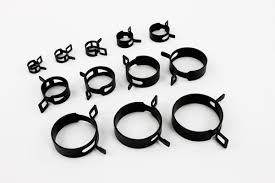
These things are evil and should be banned!
"Keep calm, relax, focus on the problem & PULL THE BLOODY TRIGGER"
Please Log in or Create an account to join the conversation.
- David Aiketgate
-
 Offline
- David
-

Super Users
- mgf mk2 freestyle mpi 16" wheels, in Anthracite.
- Posts: 20627
- Thanks: 4583
Whenever I alluded to David being the custodian of arcane knowledge on the PRT, he demurrers & make the excuse that the information he put up was from a third party.
I simply can’t recall doing any jiggery pokery around the heater pipes but that’s my memory mist.
I would have another look at David’s information & maybe he’ll put in an appearance to add his weight of knowledge to my dearth of memory.
M
David Aiketgate replied:-
When my pipework was converted to accommodate the prt, my friendly professional mechanic did it.
he referred to this photograph:-
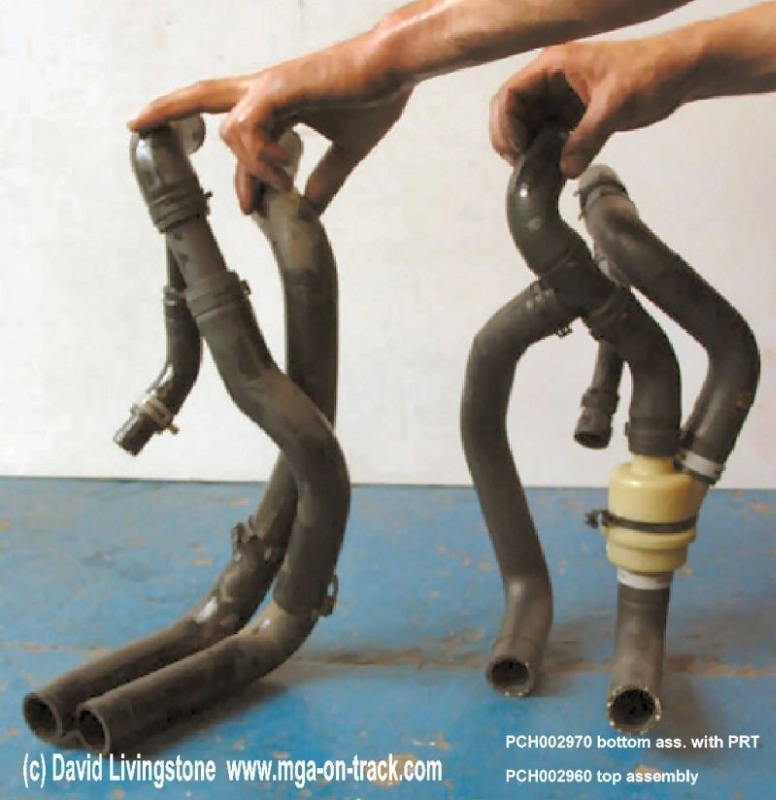
and I recall him saying that he only needed a 't' piece and one small diameter piece of hose in addition to adapting the existing pipework to fit.
The work was completed from below without the need for engine out!
Don't forget to remove the original thermostat...
David

Please Log in or Create an account to join the conversation.

But good luck with whatever you decide to do. Glyn.
Please Log in or Create an account to join the conversation.
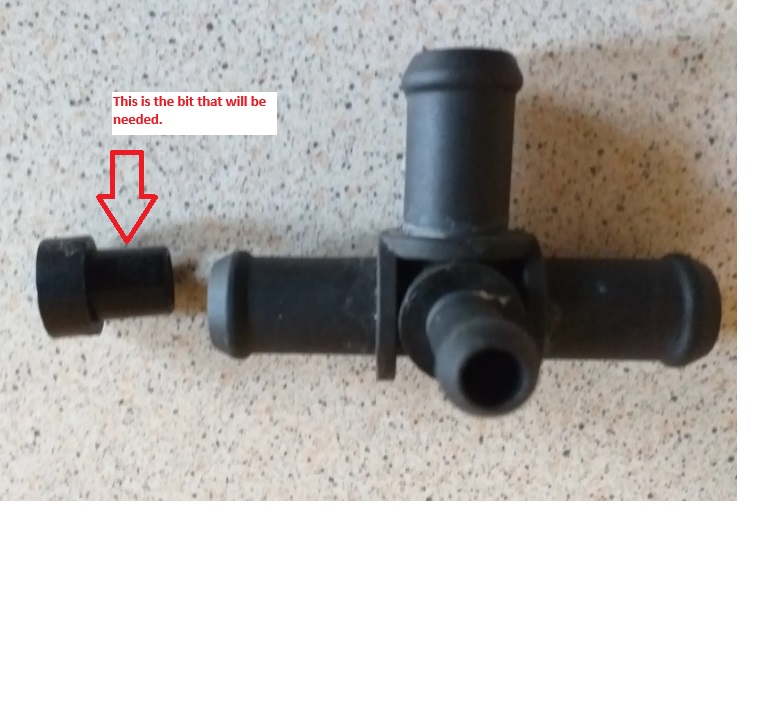
It apparently has a hole through it of 8mm bore.
i know you have to cut the “mechanism” from the existing thermostat (mounted at the engine), but in doing that the hole must be way larger than 8mm.
Now to answer various questions
Yes, those are the spring clips, and without good access difficult to get aligned properly.
Why convert. Well as said I have some doubt about hose condition, the existing hoses no longer have the heat shield, if renewing hoses it makes sense to convert to reduce potential for HGF (if the conversion by the factory was not beneficial why would they have done it).
Hose kits are more readily available for the PRT particularly in silicone.
The downside- leaving the hoses for the heater will forever be a weakness (but I’m not about to drop the engine to gain access).
Please Log in or Create an account to join the conversation.
Any ideas please (other than find a machine shop to turn one up).
Please Log in or Create an account to join the conversation.
- judiths handyman
-
 Offline
- Time served MGer
-

Site Supporter
- Posts: 456
- Thanks: 188
In industrial applications where the clamps do not have to be removed regularly, eared clamps are used, the type with a double ear that is permanently crimped with a pair of wide jawed snips or pliers. They of course can only be removed with a junior hacksaw, so only ideal where access is not an issue and regular removal is not required.
Please Log in or Create an account to join the conversation.
We find these types of clamp hold well due to their permanent crimped nature.
There are both double and "van Gough" single eared versions
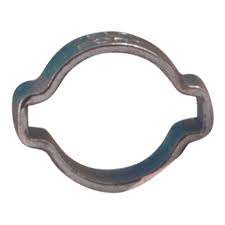
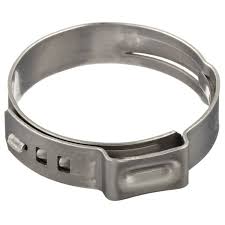
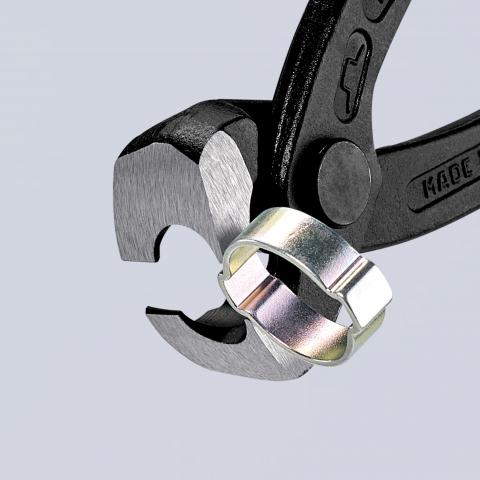
you need special crimping pliers to crimp them and these come in single jawed
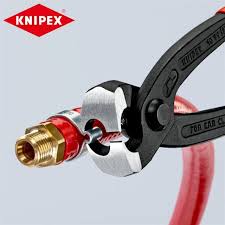
and double jawed with side jaws for space restriced applications
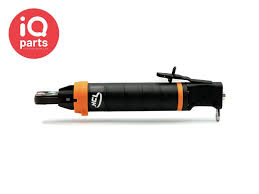
There are also pneumatic are crimping tools available.
To remove these clamps we either grab them by the ear with a set of wire cutters and twist to open them up or cut the ear through with a small set of bolt cutter type pliers at the eye of the crimp, I've also seen angle griners used to remove the but this usually damages the hose!
"Keep calm, relax, focus on the problem & PULL THE BLOODY TRIGGER"
Please Log in or Create an account to join the conversation.
- judiths handyman
-
Offline
- Time served MGer
-
Site Supporter
- Posts: 456
- Thanks: 188
The intention being to save money on compressor costs.
It worked and saved thousands p.a. for some.
But the one item I could just about guarantee would leak was the humble jubilee clip.
On the treatment of equipment on site by the heavy handed, that kept me in spares business.
Please Log in or Create an account to join the conversation.
- judiths handyman
-
Offline
- Time served MGer
-
Site Supporter
- Posts: 456
- Thanks: 188
it would bottom out perhaps (as it is slid in) on the inner wall of the cross piece, or a transition fit, tapped in with a toffee hammer ?
Please Log in or Create an account to join the conversation.

The replacement of the hoses through the blanking plate can be done from under the car, but you have to start inside the car as the new hoses get attached to the heater pipe and then pushed through to the rubber blanking plate.
[size=10pt]Mark[/size]
95 MGF
Please Log in or Create an account to join the conversation.
But thank you for the suggestion it confirms the possible option.
As I gazed into the area beneath the coolant expansion tank it became very clear that access to the area around the thermostat is “limited” if not restricted. I have read the “how to’s” on servicing the thermostat and marvel at how anyone can get access to that area without. Removing the inlet tract which would be a whole new ball-game if that lot has to come off.
So my thinking is that I might just renew the bits I can get to and hope until the HGF fails which it may well do in due course.
My suspicion is that if I disturb one joint around the water rail associated with the stat one of the others is likely to leak and who knows what corrosion has taken place where the stat connects to the engine or at the hard metal pipe ends.
Can anyone offer experience in any of these areas please?
Please Log in or Create an account to join the conversation.